


As the global population shifts toward a more significant demographic of older adults, the conversation around eldercare has evolved. Consequently, in 2026, the traditional “nursing home” is no longer the default answer for families facing the complexities of aging. Instead, 24-hour home care has emerged as the gold standard. It is the preferred choice for those who wish to maintain their independence, comfort, and dignity. This model provides high-level medical and personal support without the need for relocation.
Deciding to move a loved one into a facility is often fraught with guilt and stress. However, 24-hour care offers a transformative alternative. It provides a seamless blend of professional healthcare and the emotional security of staying in one’s own home. This guide explores the mechanics, benefits, and practicalities of these around-the-clock services.
1. What is 24-Hour Home Care?
24-hour home care is a specialized service where professional caregivers provide continuous assistance throughout the day and night. Usually, this involves a rotating team of Personal Support Workers (PSWs) or Registered Practical Nurses (RPNs).
Unlike “live-in care,” where a single caregiver resides in the home and requires mandatory sleeping breaks, 24-hour care ensures that a caregiver is awake and alert at all times. This is a critical distinction for patients with high-acuity needs. For instance, it is vital for those at risk of falling or individuals with advanced dementia. It is also essential for those requiring scheduled medication through the night.
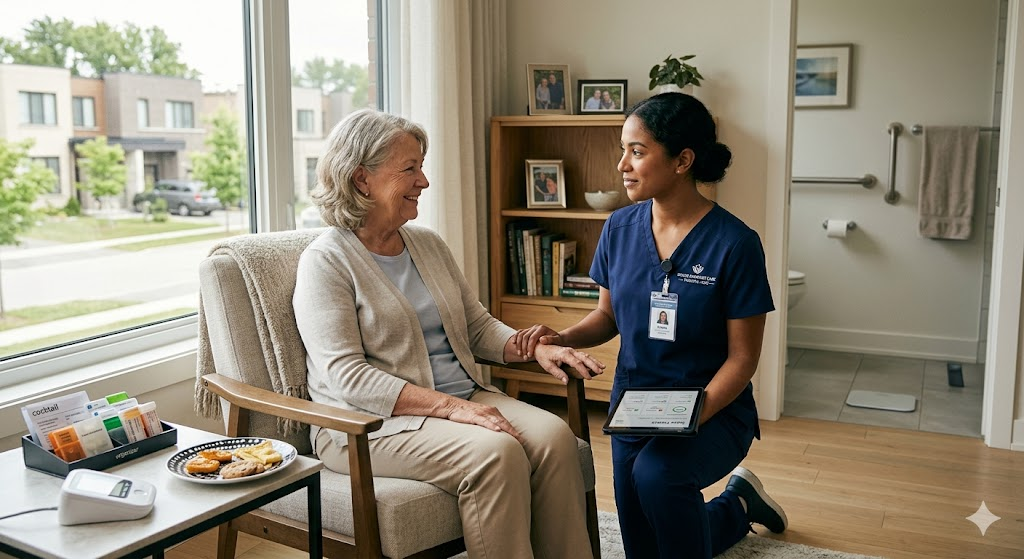
2. Who Benefits Most from Around-the-Clock Support?
While many seniors enjoy the occasional help of a visiting aide, certain clinical factors make 24-hour care a necessity.
- Advanced Dementia and Alzheimer’s: For those living with cognitive decline, the “sundowning” effect can be dangerous. This involves increased confusion and agitation in the late afternoon. Continuous supervision ensures the environment remains calm. Furthermore, the patient is redirected gently if they become disoriented at 3:00 AM.
- Post-Surgical Recovery: Major surgeries, such as hip replacements, require intensive monitoring in the initial weeks. Caregivers assist with “transferring” from bed to chair. They also manage wound care and ensure physical therapy exercises are performed safely. This significantly reduces the risk of hospital readmission.
- Palliative and End-of-Life Care: When a patient’s goal is comfort rather than curative treatment, 24-hour care allows them to spend their final days surrounded by family. Caregivers work alongside hospice teams to manage pain levels. Moreover, they provide essential emotional support to the family.
- High Fall-Risk Patients: For a senior with frailty or balance issues, a single fall can be life-altering. Having a professional present to assist with “activities of daily living” (ADLs) is crucial. They use expert lifting techniques for tasks like bathing, toileting, and dressing.
3. The Core Components of Professional Care
A 24-hour care plan is not a “one size fits all” service. Rather, it is a highly tailored medical and social strategy.
Personal Care and Hygiene:
Professional caregivers assist with the most intimate tasks. They focus specifically on preserving the senior’s dignity. This includes grooming, oral care, and incontinence management. Proper hygiene is also essential for preventing skin breakdowns. Specifically, it prevents pressure ulcers, which are common in less-monitored environments.
Medication Management:
Managing a “cocktail” of prescriptions is a daunting task. Therefore, caregivers provide timely reminders and monitor for adverse reactions. In 2026, many care agencies use integrated digital health platforms. According to the National Institute on Aging, proper medication adherence is a primary factor in maintaining senior independence. These digital tools alert nurses and family members the moment a dose is administered.
Nutritional Support and Meal Preparation:
Malnutrition and dehydration are hidden crises in the elderly population. To combat this, caregivers prepare healthy, balanced meals. These meals adhere to specific dietary restrictions, such as low-sodium or diabetic-friendly diets. More importantly, they provide companionship. This makes eating an enjoyable social activity rather than a chore.
Light Housekeeping and Safety Audits:
A cluttered home is a dangerous home. Caregivers ensure that walkways are clear and lighting is adequate. They act as the “eyes and ears” of the family. Consequently, they identify potential hazards before they lead to an accident.
4. The Emotional and Psychological Impact
The primary benefit of home care is often cited as physical safety. However, the psychological benefits are equally profound.
Combating Loneliness:
Social isolation is a major contributor to cognitive decline and depression in seniors. A 24-hour caregiver provides constant companionship. They engage the senior in conversation or play games together. They also accompany them on short walks. This human connection is vital for maintaining a sense of purpose.
Preservation of Routine:
In a facility, the resident must adapt to the institution’s schedule. This includes set times to eat, wake, and bathe. Conversely, with 24-hour home care, the care adapts to the senior. If they have enjoyed a late-night cup of tea for forty years, they can continue to do so. This consistency is particularly soothing for patients with memory loss.
5. Peace of Mind for the Family
For the “sandwich generation,” the stress of caring for parents and children simultaneously can be overwhelming. 24-hour care functions as a support system for the entire family unit.
- Respite for Primary Caregivers: It allows family members to return to their roles as sons and daughters. They are no longer forced to act as “nurses” around the clock.
- Real-Time Updates: Most modern agencies provide families with access to a “Care Portal.” Here, they can see notes from the shift change. This ensures they are always in the loop regardless of where they live.
6. The Logistics: Costs and Scheduling
While 24-hour care is an investment, it is often comparable to high-end private nursing facilities. This is especially true for couples who can share a caregiver.
The Shift System:
Typically, 24-hour care is covered by two 12-hour shifts or three 8-hour shifts. This rotation ensures that the caregiver is always rested. As a result, they remain capable of providing the highest level of alert care.
Funding Options:
In many regions, government grants and long-term care insurance can help offset the costs. Veteran benefits are also a common source of funding. It is advisable to consult with a Care Coordinator. They can help navigate the financial landscape and build a sustainable long-term plan.
Conclusion: A Foundation for Quality of Life
Aging is an inevitable journey, but it doesn’t have to be a journey toward loss. 24-hour home care is about more than just “supervision.” Instead, it provides a robust framework that allows a senior to thrive. It keeps them in the environment where they feel most powerful and at peace.
By choosing around-the-clock support, families are choosing a path that prioritizes safety and medical excellence. Most importantly, they are choosing the preservation of the individual’s story. In the comfort of home, every day remains a life well-lived. This commitment ensures that the final chapters are defined by dignity and unwavering support.