


For a person living with Alzheimer’s or other forms of dementia, the world often becomes a place of shifting shadows. It is a landscape defined by fading recognition and sensory overload. In the advanced stages of cognitive decline, the environment is not just a backdrop; rather, it serves as a critical component of clinical stability. Consequently, in 2026, the medical community increasingly recognizes that at-home care is often the most effective “prescription.” It is the gold standard for maximizing the comfort, safety, and dignity of those facing memory impairment.
Transitioning to a facility can frequently trigger “Transfer Trauma.” This phenomenon involves a rapid decline in cognitive and physical health caused by the intense stress of a new environment. Conversely, staying at home allows the individual to remain anchored to their personal history. The following guide explores how specialized home care transforms the daily experience of living with dementia.
1. The Power of “Environmental Memory”
Dementia slowly erodes short-term memory; however, “environmental memory” often remains intact much longer. This refers to the subconscious familiarity with one’s physical surroundings.
A senior may not remember what they had for breakfast. Nevertheless, their hands “remember” the specific height of the kitchen counter. They recognize the feel of the banister and the unique creak of the floorboard leading to the bathroom. In a new facility, these subconscious cues are suddenly gone. This loss often leads to increased “sundowning,” heightened agitation, and frequent falls. At home, the physical layout acts as a silent caregiver. It provides a sense of orientation that no modern institution can truly replicate.
2. Personalized Routines: The Antidote to Anxiety
Anxiety is a hallmark of Alzheimer’s disease. When the brain can no longer predict what happens next, it enters a state of constant “fight or flight.” To combat this, specialized home care providers prioritize the Preservation of Routine.
- Circadian Consistency: Home caregivers ensure that the senior wakes up, eats, and winds down at the exact same time every day. This consistency helps regulate the biological clock. This is vital because these rhythms are often disrupted in dementia patients.
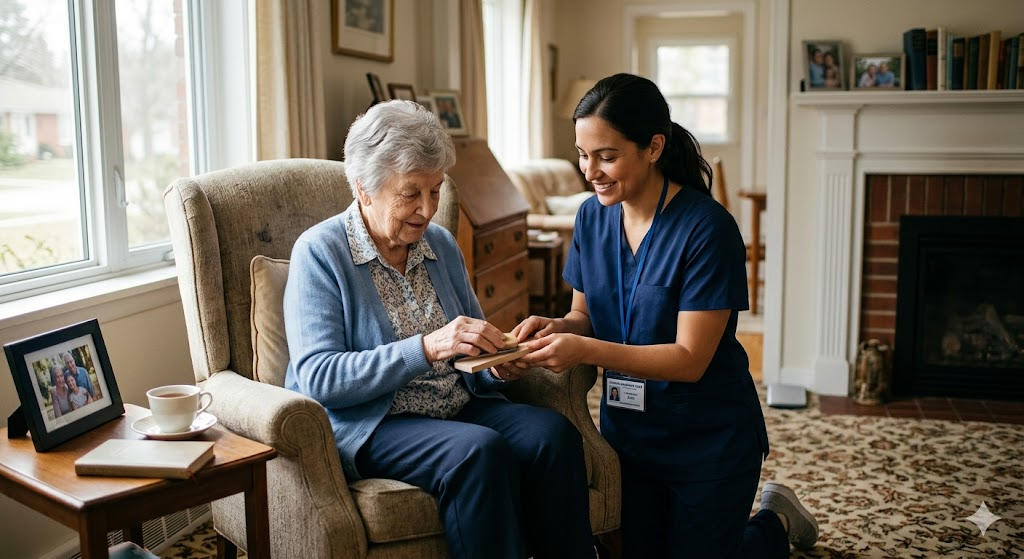
- Tailored Engagement: Unlike a group activity in a care home, home care allows for activities based on the individual’s specific life story. For instance, if a senior was once a carpenter, a caregiver might engage them with sanding wood. They might also help them organize a toolbox. This “person-centered” approach provides a sense of purpose. Furthermore, it reduces the “vocalizations” or pacing associated with boredom and frustration.
3. Nutritional Stability and Familiar Tastes
Weight loss and dehydration are significant risks in dementia care. In a communal dining hall, the noise and smells can be overstimulating. Furthermore, the presence of strangers can cause a senior to “shut down” and refuse to eat entirely.
At home, a caregiver can prepare familiar “comfort foods.” These meals often trigger positive sensory memories. Additionally, they can monitor hydration levels closely. They also use specialized techniques, such as offering finger foods for those who have lost the dexterity for utensils. Many also use high-contrast plates, such as bright red. According to research from the Alzheimer’s Association, high-contrast colors help dementia patients better identify their food on the plate.
4. Specialized Safety and Wandering Prevention
One of the primary reasons families consider facilities is the fear of “wandering.” However, 24-hour home care provides a level of one-on-one supervision. This level of care is physically impossible in a facility with a high staff-to-resident ratio.
Modern Safety Interventions include:
- GPS and Sensor Integration: In 2026, home care agencies utilize non-intrusive floor sensors. They also use smart-locks that alert the caregiver the moment a door is opened. This allows for immediate redirection without the need for restrictive physical barriers.
- Reduction of “Triggers”: Caregivers are trained to identify environmental triggers. One example is mirrors, which can be frightening if the senior doesn’t recognize their own reflection. Another trigger is busy patterned carpets. These can look like “holes” to someone with altered depth perception.
5. Managing the “Sundowning” Effect
“Sundowning” refers to the increased confusion and restlessness that occurs as natural light fades. In a home setting, a caregiver can proactively manage this transition through various methods:
- Lighting Therapy: Caregivers can minimize the shadows that cause hallucinations by increasing indoor brightness in the late afternoon.
- Calming Interventions: Whether it is a weighted blanket or familiar music from the senior’s youth, home care allows for a personalized “cooldown” period. This often prevents the need for sedative medications. A gentle hand massage can also be incredibly effective during these hours.
6. The Role of Professional Caregivers: Beyond Supervision
Home care for dementia is not just about “watching” the senior. Instead, it is about providing specialized clinical support. Personal Support Workers (PSWs) trained in dementia care use techniques like Validation Therapy. Rather than correcting a senior who is asking for their long-deceased mother, the caregiver validates the emotion. They might say, “You must really miss her; tell me about her favorite dress.” This approach successfully de-escalates distress.
Furthermore, home caregivers act as the bridge to the medical team. They monitor for “silent” issues like Urinary Tract Infections (UTIs). In seniors, these often present as sudden behavioral changes rather than physical pain. Catching these early prevents unnecessary emergency room visits.
7. Support for the Family: The “Shared Burden”
Dementia is truly a family disease. The “primary caregiver” is usually a spouse or adult child. Consequently, they often suffer from extreme burnout. This exhaustion inversely affects the patient’s health. By bringing in professional home care, the family dynamics begin to shift:
- Respite: Family members can finally sleep through the night. They can rest knowing a professional is awake to manage any midnight wandering.
- Education: Caregivers teach family members how to communicate more effectively. As a result, they turn high-stress interactions into moments of genuine connection.
- Emotional Longevity: This support allows a spouse to remain a “partner” rather than just a “task-master.” It preserves the relationship’s emotional core for as long as possible.
Conclusion: Choosing Comfort Over Clinicality
While dementia is a journey of loss, the setting of that journey matters deeply. At-home care transforms the experience from one of institutional confinement to one of supported independence.
By remaining in a sanctuary filled with the “scent of home,” seniors can live a life defined by what they can still do. They are surrounded by the echoes of a lifetime of memories. In the familiar light of their own living room, dignity isn’t just a goal; it is a daily reality. Choosing home care for a loved one is an act of profound love. It ensures their final chapters are written in a place of peace. Ultimately, they are surrounded by the comfort of a familiar and unwavering sanctuary.