


Caring for a loved one with dementia is a journey defined by profound love, unique challenges, and the constant need for adaptation. As the condition progresses, the familiar walls of home can become a source of both comfort and confusion. Navigating this path requires more than just patience; it requires a strategic approach to safety, communication, and emotional well-being. Furthermore, providing high-quality care ensures they live with dignity while simultaneously supporting the mental health of their caregivers.
Understanding the Dementia Landscape
To begin, it is important to realize that dementia is not a single disease but an umbrella term for a range of cognitive impairments. Among these, Alzheimer’s is the most common variety. It affects memory, thinking, orientation, and the ability to perform everyday tasks. Consequently, when a parent or spouse begins to lose their “map” of the world, the home environment becomes their primary sanctuary.
The ultimate goal of home care is to bridge the gap between the patient’s declining abilities and their need for a meaningful life. This involves creating a “dementia-friendly” ecosystem that prioritizes routine. In addition, it is vital to minimize environmental triggers for agitation.
1. Creating a Safe and Supportive Environment
Safety is the cornerstone of effective dementia care. Because judgment and physical coordination often decline, the home must be modified to prevent accidents.
- Remove Tripping Hazards: First, clear away throw rugs, electrical cords, and general clutter. Ensure that walkways are wide and well-lit.
- Lighting is Key: Use high-wattage bulbs to reduce shadows, which can be frightening or confusing. Moreover, motion-sensor lights in hallways are excellent for nighttime navigation.
- Safety Locks and Signage: Install locks high or low on doors if wandering is a concern. Additionally, use simple signs, such as a picture of a toilet on the bathroom door, to help with orientation.
- Kitchen Safety: Consider installing auto-shutoff valves on stoves. Alternatively, you might remove knobs if the patient attempts to cook unsupervised.
2. The Power of Routine and Structure
For someone whose internal world is chaotic, external structure provides a vital sense of security. A predictable daily schedule reduces anxiety and “sundowning”—a state of increased confusion that often occurs in the late afternoon.
A Sample Daily Flow:
- Morning: Maintain a consistent wake-up time, followed by a nutritious breakfast and grooming.
- Late Morning: Engage in low-impact physical activity or cognitive stimulation, such as puzzles or music.
- Lunch: Provide a quiet meal with minimal distractions.
- Afternoon: Schedule “quiet time” or a nap. Afterward, try creative engagement like painting or looking through old photo albums.
- Evening: Implement a calming bedtime routine involving dim lights and soft music.
3. Effective Communication Strategies
Communication becomes an art form when caring for a dementia patient. As verbal skills decline, non-verbal cues become paramount. Therefore, your approach must be intentional.For a deeper look at specialized techniques, the Alzheimer’s Association offers a comprehensive guide on how to communicate at every stage of the disease.”
- Keep it Simple: Use short sentences and ask only one question at a time. For instance, instead of “What do you want for lunch?”, try “Would you like a sandwich or soup?”
- Body Language: Always maintain eye level and offer a gentle touch on the arm. Even if they don’t understand your words, they will mirror your energy.
- The “Validation” Method: If a patient is distressed about wanting to “go home,” don’t argue with logic. Instead, validate their feelings by saying, “I know you miss home. Tell me about your favorite room there.” This redirects the energy without causing a confrontation.
4. Managing Behavioral and Psychological Symptoms
It is crucial to understand that behaviors like aggression, repetition, or wandering are often forms of communication. Usually, the patient is trying to express a need they can no longer verbalize, such as pain, hunger, or boredom.
- Aggression: This is frequently triggered by fear or overstimulation. In response, step back, give them space, and try to identify the trigger.
- Repetitive Questions: This stems from a loss of short-term memory. Instead of saying “I already told you,” answer as if it’s the first time. Alternatively, write the answer down on a visible whiteboard.
- Wandering: Ensure the patient has an ID bracelet. Furthermore, engaging them in structured physical activity during the day can help reduce the urge to wander at night.
5. Nutrition and Hydration
Maintaining proper nutrition is a common hurdle in the middle and late stages. Patients may forget to eat or lose the coordination to use utensils.
- Finger Foods: If silverware becomes frustrating, serve nutrient-dense finger foods like chicken strips or fruit slices.
- Hydration: Dehydration can worsen confusion. For this reason, offer small sips of water throughout the day rather than expecting them to drink a full glass at once.
- Social Dining: Whenever possible, eat with them. Mirroring the action of eating can encourage them to do the same.
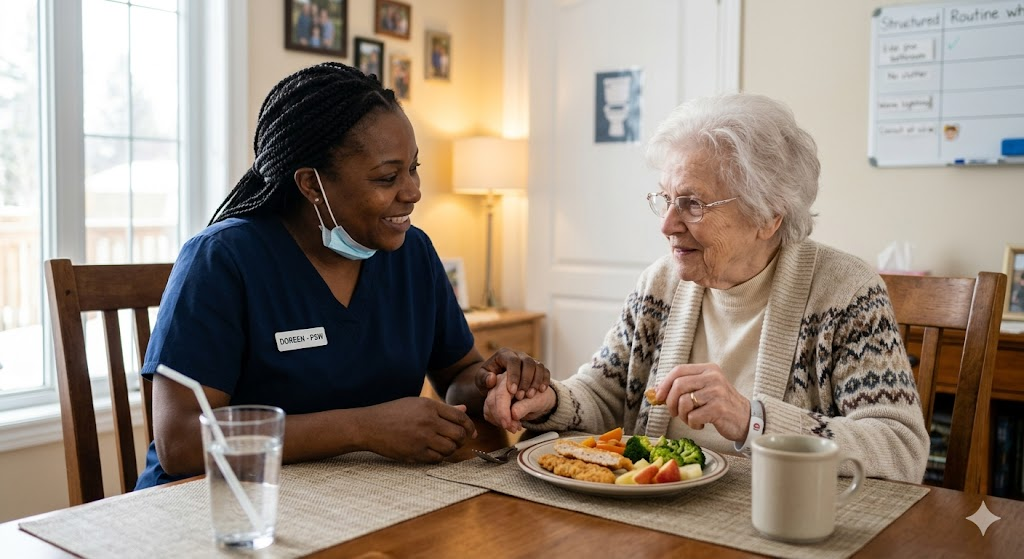
6. The Vital Role of Professional In-Home Care
Many families feel they must “do it all” to prove their love. However, professional home care services are often a necessity, not a luxury. Professional caregivers bring specialized training that can significantly improve the patient’s quality of life.
- Respite Care: This allows family members to take a break and prevent burnout.
- Skilled Nursing: This is essential for managing medications and handling complex medical needs.
- Personal Care: Assistance with bathing can sometimes be less stressful for a patient when performed by a professional rather than a child or spouse.
7. Preventing Caregiver Burnout
Ultimately, you cannot pour from an empty cup. Caregivers of dementia patients are at a high risk for clinical depression and physical illness.
- Acknowledge Your Feelings: It is normal to feel grief or frustration. These feelings don’t make you a bad caregiver; rather, they make you human.
- Join a Support Group: Connecting with others who “get it” is incredibly healing.
- Set Boundaries: It is perfectly okay to say no to extra responsibilities.
Conclusion: Finding Moments of Joy
While dementia involves many losses, it does not mean the end of connection. Home care is about preserving the “personhood” of the patient. Indeed, joy is found in the smile during a favorite song or the peace of being in a familiar space. By focusing on safety, routine, and compassionate communication, we can ensure that our elders feel valued throughout their journey.
Remember, you don’t have to walk this path alone. Reach out to local aging services and professional home care providers to build a support system that works for your family.