


The moment seniors are cleared for discharge from the hospital is often met with a profound sense of relief. However, for many families, that relief is quickly followed by a daunting realization: the real work of recovery is just beginning. The transition from a 24-hour clinical environment to the home setting is a high-risk period where complications, medication errors, and readmissions are most likely to occur.
In this detailed guide, we will walk through the essential steps to managing a successful post-hospital recovery, ensuring that your elderly family member has the support, safety, and clinical oversight they need to regain their independence.
The Critical Nature of the First 72 Hours
To begin with, it is vital to recognize that the first three days at home are the most influential in determining long-term success. During this window, the patient is often transitioning from intravenous medications to oral ones, and the physical toll of a hospital stay—even a short one—can result in significant muscle wasting and fatigue.
Consequently, the home environment must be fully prepared before the patient even crosses the threshold. This means that a designated primary caregiver should be identified, and a clear schedule for monitoring vitals, pain levels, and fluid intake must be established. If the transition is handled haphazardly, the senior may quickly become overwhelmed, leading to a decline in both physical health and morale.
Reviewing the Discharge Summary with Precision
Before leaving the facility, you will receive a discharge summary. This document is your roadmap for the coming weeks. Specifically, you must ensure that every instruction is clear. If a doctor mentions “limited weight-bearing,” you need to know exactly what that looks like in a home setting.
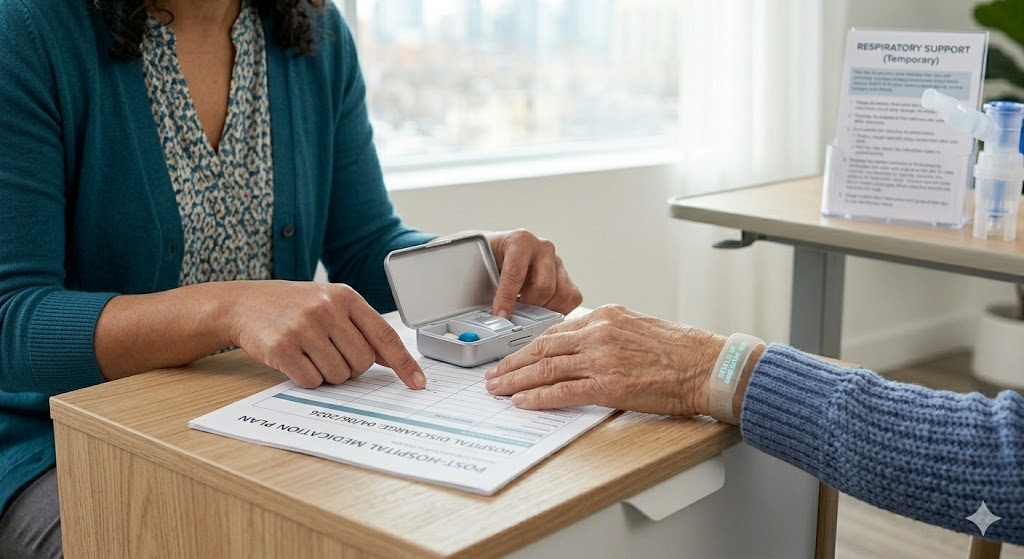
Furthermore, pay close attention to the medication reconciliation list. It is common for hospitals to stop “home medications” and start new ones during a stay. Therefore, you must confirm which previous prescriptions should be resumed and which should be discarded. Mismanagement of medication is one of the leading causes of emergency room readmissions for seniors, so having a clear, updated chart is non-negotiable.
Preparing the Home Environment for Safety
Ideally, the home should be modified while the patient is still in the hospital. Even a senior who was mobile before their stay may now require assistive devices. For instance, a temporary hospital bed on the ground floor can prevent the need for navigating stairs, which are a major fall risk during the early recovery phase.
In addition, consider the bathroom. Installing a raised toilet seat and a shower chair can provide the senior with a sense of dignity and safety. Removing area rugs, ensuring hallways are brightly lit, and clearing paths for a walker or wheelchair are simple yet effective ways to prevent accidents. By proactively addressing these environmental factors, you create a space that encourages movement rather than fear of falling.
The Role of Professional Support Workers
While family members often want to provide all the care themselves, the physical and emotional demands of post-hospital support can be exhausting. This is where Personal Support Workers (PSWs) or home care assistants become invaluable.
Notably, a professional caregiver can assist with “activities of daily living” (ADLs), such as bathing, dressing, and toileting. This allows the family member to focus on being a supportive relative rather than a clinical technician. Additionally, having a professional present ensures that subtle changes in the patient’s condition—such as increased confusion or signs of infection—are caught early and reported to the medical team immediately.
Rehabilitation: The Importance of Early Mobilization
A common mistake in elder care is assuming that “rest” means staying in bed all day. In reality, prolonged bed rest can lead to pneumonia, blood clots, and permanent loss of mobility. As a result, early mobilization is a cornerstone of recovery.
Physiotherapy should ideally begin as soon as the patient is stable. A therapist can visit the home to guide the senior through gentle exercises designed to restore strength and balance. Moreover, they can teach the patient how to use new assistive devices correctly. By engaging in structured rehabilitation, the senior can see tangible progress, which is a massive boost for their mental health and motivation.
Nutritional Support for Healing
Healing requires a significant amount of energy and protein. However, many seniors experience a loss of appetite after a hospital stay due to medication side effects or the change in environment. Therefore, focusing on nutrient-dense, easy-to-digest meals is essential.
For example, small, frequent meals are often better tolerated than three large ones. Incorporating protein shakes or fortified foods can help meet caloric needs without requiring the senior to eat large volumes of food. Proper hydration is equally important, especially if the patient is on new medications that affect kidney function or blood pressure. Monitoring intake and output can help prevent dehydration, which often manifests as sudden confusion in the elderly.
Monitoring for Red Flags
Even with the best care, complications can arise. Consequently, caregivers must be trained to recognize “red flags” that require a call to the doctor or a trip back to the hospital. These include:
- A fever above 101°F (38.3°C) or a sudden drop in body temperature.
- Increased redness, swelling, or discharge from a surgical incision site.
- Sudden shortness of breath or chest pain.
- New or worsening confusion (Delirium).
- Inability to pass urine or a sudden change in bowel habits.
Initially, these signs might seem minor, but in a recovering senior, they can escalate rapidly. Having a “red flag” checklist posted on the refrigerator ensures that everyone in the home knows exactly what to look for.
The Psychological Impact of Hospitalization
Hospitalization is often a traumatic event for seniors. They may feel a significant loss of autonomy. Clinical settings also cause sensory overload. This creates a fear of never returning to “normal.” Such stress can lead to post-hospital depression or anxiety.
To combat this, re-establish a sense of routine quickly. Start with regular meal times. Include brief social visits from friends. Provide access to familiar comforts like a favorite chair. A television program can also help.
Validation of their feelings is also key. Acknowledge that the recovery is difficult. Express confidence in their progress. This help the senior stay mentally resilient.
Coordinating Follow-Up Care
The discharge from the hospital is not the end of the medical journey; it is merely a transition to outpatient care. Within the first week, you should have follow-up appointments scheduled with the primary care physician and any specialists involved in the hospital stay.
Undoubtedly, these appointments are critical for adjusting treatment plans based on how the senior is performing at home. It is helpful to keep a “recovery journal” where you note down any questions, side effects, or improvements to share with the doctor. For evidence-based resources on managing transitions in care and preventing readmissions, the Institute for Healthcare Improvement (IHI) offers valuable insights into best practices for patient safety.
Conclusion: A Collaborative Path to Wellness
Supporting a senior after a hospital stay is a marathon. It is not a sprint. This process requires clinical vigilance and environmental adaptation. It also needs deep emotional empathy.
You can improve the chances of a full recovery. First, leverage professional help. Second, prepare the home in advance. Third, stay organized with all medical data.
Do not feel that you must do this alone. The transition is complex. However, a structured plan makes it manageable. A dedicated support team helps your loved one move past the trauma. They can return to a life of comfort and dignity.
The goal is not just to survive this phase. Instead, use it as a foundation for a stronger future. Investing this effort now ensures the “silver years” remain bright. This is true even after a medical setback. With patience and the right resources, the path home is clear. You can navigate the move from the hospital bed to the armchair successfully.